
Can You Buy a House Without a Degree?
Yes. You do not need a college degree to buy a house. Mortgage lenders are not looking for a diploma. They are looking for income, credit, savings, and debt levels. That means many people in the trades, technical careers, public service, and other non-degree paths can absolutely become homeowners.
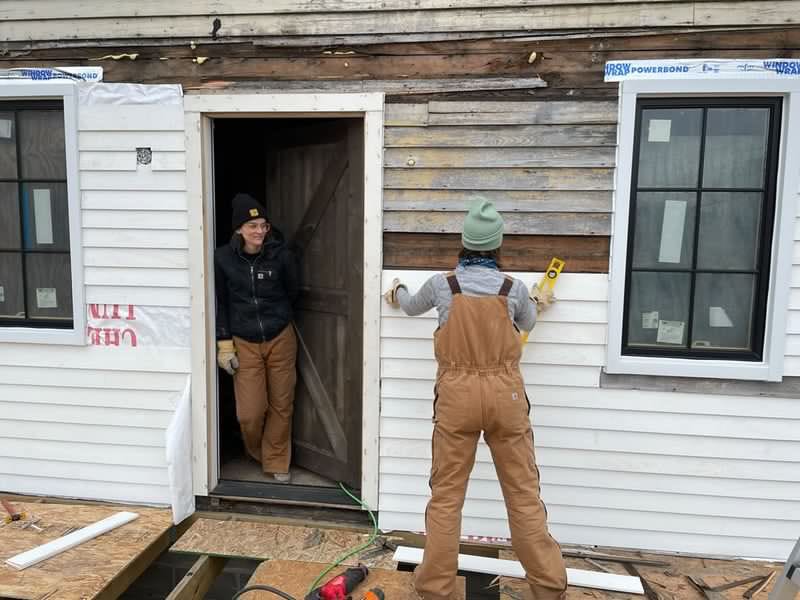
The Short Answer
Yes — you can buy a house without a degree.
A mortgage lender does not typically ask whether you went to college. They want to know whether you can realistically repay the loan. That comes down to a few basic financial factors, not whether you earned a diploma.
A degree can help some people earn more, but it is not itself a requirement for homeownership.
What Banks Actually Care About
- Stable income: Can you show reliable earnings from work or self-employment?
- Credit score: Have you managed debt responsibly over time?
- Debt-to-income ratio: Do your monthly debt payments leave room for a mortgage?
- Cash to close: Do you have money for down payment, earnest money, and closing costs?
You Do Not Need a White-Collar Job to Buy a House
Many people still assume homeownership belongs mainly to college graduates or office professionals. That is simply not true. Plenty of homeowners work in careers that do not require a traditional four-year degree.
In reality, what matters is whether your job produces the income needed to support the mortgage. A skilled tradesman, CDL driver, firefighter, paramedic, technician, mechanic, or small business owner may be in a stronger buying position than a degree-holder carrying large student loans.
| Career | Degree Required? | Can It Support Homeownership? | Why It Often Works |
|---|---|---|---|
| Electrician | No traditional 4-year degree required | Yes | Strong earnings, paid apprenticeship path, low student debt |
| HVAC Technician | No traditional 4-year degree required | Yes | Solid wage potential and practical entry path |
| Plumber | No traditional 4-year degree required | Yes | Skilled work with good long-term earning power |
| Truck Driver | No traditional 4-year degree required | Yes | Income can support mortgage qualification if debt is controlled |
| Welder / Fabricator | No traditional 4-year degree required | Yes | Good skilled labor income, especially with overtime or specialization |
| Mechanic / Technician | No traditional 4-year degree required | Yes | Stable skilled work with career growth potential |
Why Some Non-Degree Paths Can Lead to Homeownership Earlier
This is where the conversation gets interesting. The issue is not whether one path is morally better or more respectable. The issue is math.
A person who enters the workforce at 18, earns while learning, avoids large student loans, and builds savings may be in a stronger position to buy a home at 23 or 25 than someone who spent four years in school and graduated with debt.
Age 18–22: In School
- May graduate with student debt
- Delayed full-time income
- May have less savings by early twenties
- Degree may pay off later, but the timing matters
Age 18+: Working Earlier
- Starts earning income sooner
- Often lower or no traditional student debt
- More time to build savings
- Can be mortgage-ready faster if spending stays under control
The key point: this does not prove college is bad. It proves that timing, debt, and savings matter. A degree may increase income later. But a lower-debt path may create earlier financial flexibility.
Example: Who Looks More Mortgage-Ready at 25?
Here is the kind of comparison many young adults never see clearly explained.
| Path | Income at 25 | Student Debt | Savings | Mortgage Readiness |
|---|---|---|---|---|
| College Graduate | $55,000 | $35,000–$45,000 | $4,000–$8,000 | Possible, but debt may reduce flexibility |
| Electrical Apprentice / Tradesman | $65,000–$80,000 | $0–low debt | $15,000–$25,000+ | Often in a stronger early buying position |
These are example scenarios, not guarantees. Individual results depend on local housing prices, credit, overtime, spending habits, and personal choices.
What Makes Buying a House Harder — and It Is Not the Lack of a Degree
The biggest obstacles to homeownership are usually not “no college diploma.” They are:
- High monthly debt payments
- Poor credit habits
- Little savings
- Unstable income history
- Buying too much house too early
In many cases, a person without a degree but with strong income, a good credit score, and low debt may look better to a lender than a degree-holder with weak credit and heavy student loan payments.
So What Is the Real Requirement?
The real requirement for buying a house is not educational prestige. It is financial readiness.
Apartment Payments vs. House Payments: Are You Building Equity?
This is one of the biggest financial differences between renting and owning.
When you rent an apartment, your monthly payment gives you a place to live, but it does not usually build ownership. When you buy a house, part of your payment goes toward a loan on a property you own. Over time, that can help you build equity.
Yes — this is called building equity. Equity is the portion of the home that belongs to you, not the bank.
| Housing Choice | Monthly Payment | Where the Money Goes | Long-Term Result |
|---|---|---|---|
| Renting an Apartment | $1,600–$1,900 | Payment goes to the landlord | You get housing, but usually no ownership stake |
| Owning a Starter Home | $1,800–$2,200 | Part goes to interest, part to taxes and insurance, and part to principal | The principal portion helps build equity over time |
What Is Equity?
Equity = home value minus what you still owe on the mortgage.
Example:
That $30,000 is your ownership stake in the property.
How Equity Grows
- You pay down the mortgage: each payment reduces the loan balance a little more.
- The home rises in value: if the property becomes more valuable over time, your equity can grow faster.
- You improve the property: renovations or upgrades can sometimes increase value.
A house is not a magic wealth machine. You still have to pay taxes, insurance, repairs, maintenance, and interest. But over time, ownership can help people build net worth in a way renting usually does not.
Why This Matters for Young Adults
A lot of people focus only on the monthly payment. That matters, but it is not the whole story.
If someone is paying for housing either way, the bigger question becomes: Is that money only covering today, or is some of it also building something for the future?
That is one reason many working adults try to move from renting to ownership when they are financially ready. They want their housing payment to do more than just disappear each month.
Important: buying only makes sense when the payment is sustainable. Stretching too hard for a house can put someone in a worse position than renting.
Final Thought
Yes, you can buy a house without a degree.
In fact, many people do it every year through apprenticeships, technical training, skilled trades, public service, certifications, entrepreneurship, and practical work experience.
The bigger question is not, “Do I have a degree?” The bigger question is, “Am I financially prepared?”
For a lot of young adults, that shift in thinking matters. The path to stability is not always a campus. Sometimes it is a job site, a union hall, a trade school, a CDL, a certification, or a business built from the ground up.
Related Patriot Pilgrim Articles
If you are thinking seriously about money, housing, and career direction, these are the next pages to read:
FAQ
Do mortgage lenders ask for your college degree?
No. Lenders usually care about income, employment history, credit, assets, and debt — not whether you went to college.
Can skilled trades workers qualify for a mortgage?
Yes. Electricians, plumbers, HVAC technicians, welders, linemen, mechanics, drivers, and many others buy homes regularly if their finances support it.
Can student loan debt make buying a house harder?
Yes. Student loans can increase your monthly debt burden, which can affect debt-to-income ratio and reduce mortgage flexibility.
Is college still worth it for some people?
Absolutely. The point is not that college is bad. The point is that it is not the only path to stability, and people should understand the financial trade-offs before taking on large debt.
What does building equity mean?
Building equity means increasing the portion of the home that you own. This can happen as you pay down the mortgage and as the property rises in value over time.
Bottom Line
You do not need a degree to buy a house. You need a plan.
Income, credit, savings, and debt management matter more than image, status, or assumptions about what success is supposed to look like.